Live Room or Close-Miked: Two Ways a Vocal Can Feel
Compare live-room and close-miked vocals by listening for reflections, breath and distance, then hear how recording choices shape a song’s intimacy.

The common mistake when comparing a live-room vocal with a close-miked one is to treat the difference as simple polish: roomy means raw, close means finished. That shortcut can make you miss how each recording places the singer in relation to you. Listen instead for reflections, breath, consonants and the space around the voice; those cues reveal whether a vocal feels shared across a room or addressed directly to one listener.
Start with where the voice seems to stand
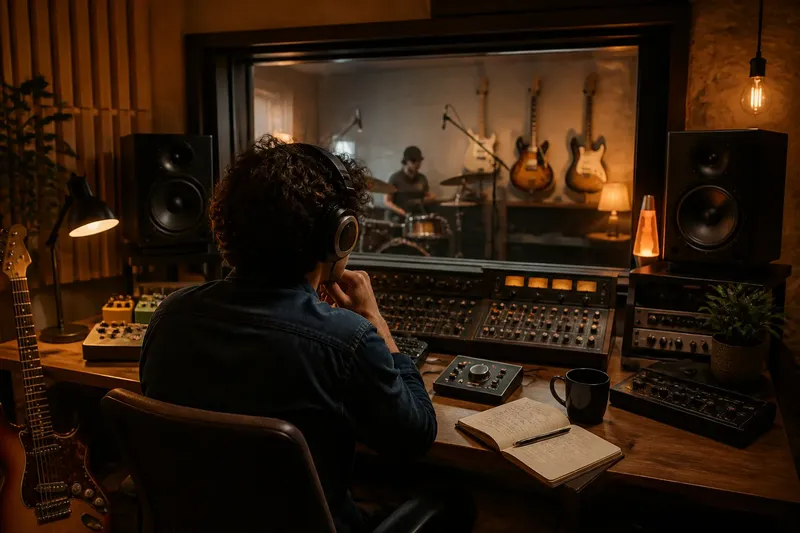
A live-room vocal carries audible evidence of the surrounding space. A word may be followed by a soft reflection from the walls, or the singer’s sound may seem to gather and fade into the room rather than stop at the microphone. The effect can suggest a performer occupying the same acoustic space as the instruments.
A close-miked vocal usually places the voice nearer in the imagined scene. Syllables arrive with a clear edge; quiet breaths or the texture at the end of a phrase may be easy to hear. The background can seem comparatively distant, even when the arrangement is full.
Neither sound tells you automatically how or where a vocal was recorded. A producer can add artificial reverberation to a close recording, and a singer in a reflective room can still be recorded in a way that sounds intimate. Treat “live room” and “close-miked” as listening descriptions, not proof of a particular session setup.
Follow the reflections after each phrase
Choose a line with a clear pause at the end. Listen just after the final vowel: does a faint tail linger, and does it seem to belong to the room around the singer? In a roomy sound, reflections may soften the gap and connect one phrase to the next.
Then listen to a short consonant such as “t” or “k”. A close vocal often gives these sounds a crisp, immediate presence. In a roomier presentation, the consonant may sit within the surrounding sound rather than leap forward, though mixing and performance choices can change that balance.
Pay attention to the silence between lines, too. A close recording can make a pause feel like a held breath, with small vocal details still near the listener. A roomier one can make the same pause feel like space opening around the singer.
Imagine one vocal taking two different shapes
Say a songwriter is shaping a quiet verse about a difficult conversation, with a single guitar beneath the vocal. In this invented situation, the first version is recorded close: the singer’s breaths and soft consonants remain present, and the guitar seems set behind the voice. The expected audible result is a private, direct address, as though the listener is close enough to catch the singer’s hesitation.
Now imagine the same singer performing the same line in a reflective room, with the microphone arrangement capturing more of the vocal’s surroundings. A gentle tail follows the held notes, and the guitar appears to share the space rather than sit behind the singer. The expected result is less like a whispered confession and more like a performance unfolding in a place the listener can picture.
The lesson is not that one version is more honest. The close take may suit a lyric whose force rests on small changes in delivery; the roomy take may make a restrained performance feel connected to its accompaniment. The choice changes the listener’s imagined distance, not the truth of the words.
Notice how the arrangement changes the impression
A vocal never arrives in isolation. A roomy sound can blend with sustained guitar, piano or strings, making the singer feel woven into the arrangement. If the accompaniment has its own audible reflections, the shared space can make the performance feel cohesive.
A close vocal can hold its position against a dense or soft backing. Clear diction may keep the lyric legible while instruments occupy the edges of the mix. But closeness can also make a restrained line feel exposed, particularly when the accompaniment leaves gaps around it.
Listen for changes within the track. If the vocal feels close in a sparse verse and more spacious in a fuller passage, the contrast may help the song widen emotionally. The change could come from added reverberation, a different vocal layer, a shift in level or another mix decision; the audible effect matters more than guessing the method.
Listen for these cues in a vocal recording
- Phrase tails: Listen for a reflection after a held note. A lingering tail can suggest space; a quick, clear stop can make the voice feel nearer.
- Breath and mouth sounds: Notice whether they sit prominently beside the lyric or blend into the performance. Their presence can add intimacy, but it does not by itself identify the recording setup.
- Consonant edges: Hear whether words begin with crisp definition or seem softened by the surrounding sound.
- Space between lines: Ask whether the pause feels close and personal or open and atmospheric.
- Relationship to the instruments: Decide whether the singer seems to share a space with the accompaniment or stand distinctly in front of it.
These are listening prompts, not a scorecard. A vocal can be close and reverberant, or roomy yet sharply defined. Let several cues form the impression rather than deciding from one breath or echo.
Which vocal sound fits the song’s feeling?
Does a roomy vocal always mean a live performance?
No. A spacious sound can come from room acoustics, added reverberation or a combination of recording and mixing choices. Listen to the reflections and the relationship between voice and instruments, but do not assume those sounds reveal the session setup.
Does close-miking always make a singer sound intimate?
It can bring small details forward, which often feels personal, but intimacy also depends on delivery, arrangement and mix. A sharply presented vocal can feel distant in mood if the performance is cool or the backing pushes it away.
Can a recording sound both close and roomy?
Yes. A vocal may have clear breath and consonant detail while a reverberant tail opens out behind the singer. That combination can preserve directness while suggesting a larger surrounding space.
What should I listen to first?
Pick one exposed phrase, then follow its last word into the pause. The decay, the breath and the apparent distance between the voice and accompaniment give you a useful starting point without requiring technical equipment.
Use distance as a way into the performance
When you compare a live-room vocal with a close-miked vocal, ask what kind of attention each invites. A roomy presentation can make you notice the singer’s place among the instruments; a close one can draw your ear towards phrasing, breath and diction. Those are different routes into a performance, not competing standards of quality.
On your next listen, stay with one line from its first consonant through the space after its final note. That small stretch can tell you whether the recording asks you to step nearer, or to hear the singer from across a room.